
Throughout their long career, Deep Purple have gone through nine official lineups, commonly known as Mark I through Mark IX. The band have released 24 studio albums and experienced some of the most dramatic member’s ins and outs in rock history, with different eras bringing major shifts in sound, songwriting, and personnel.

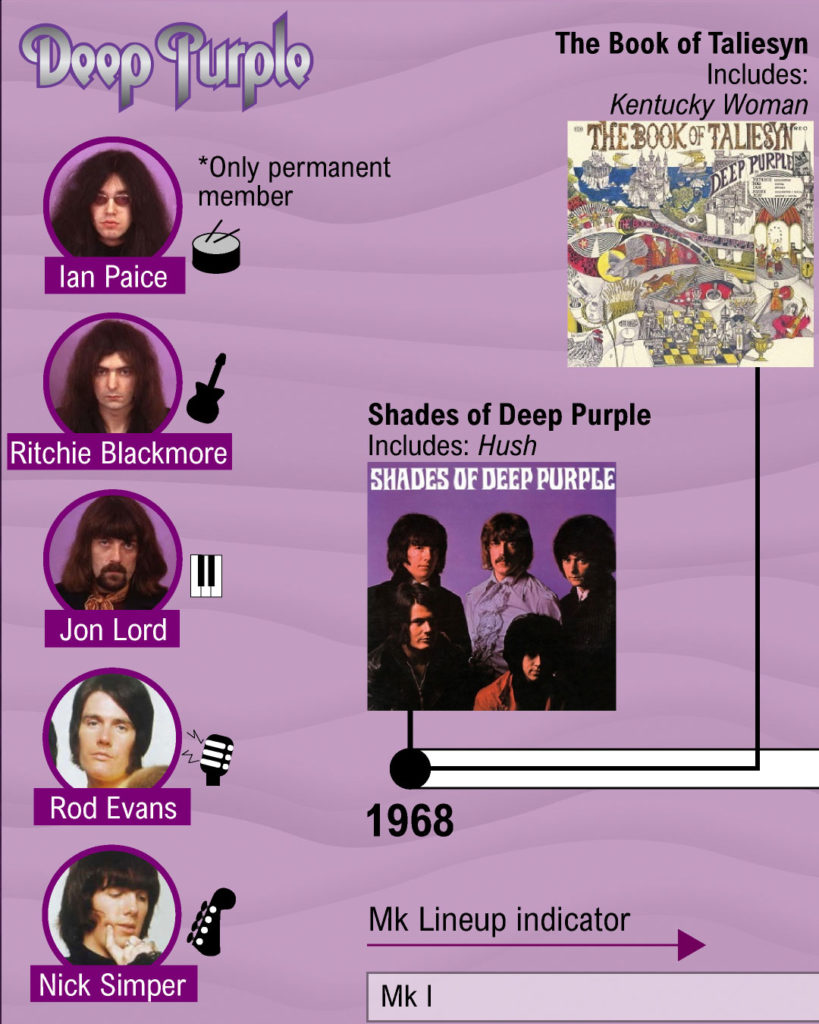
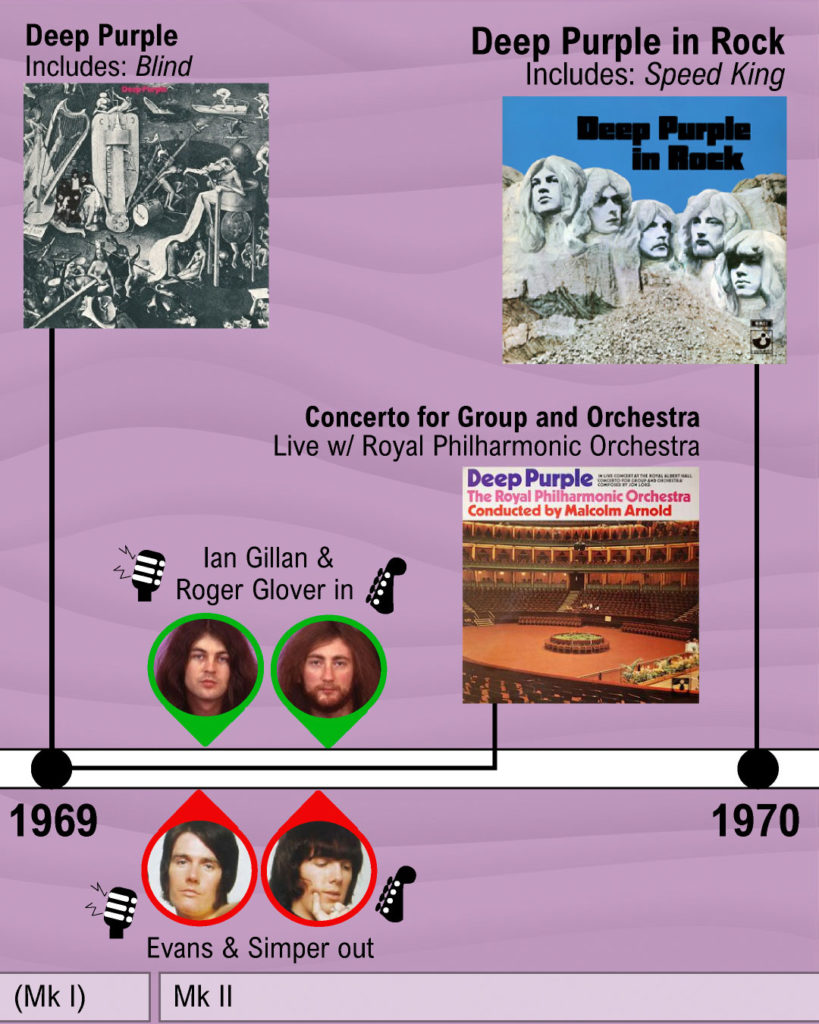
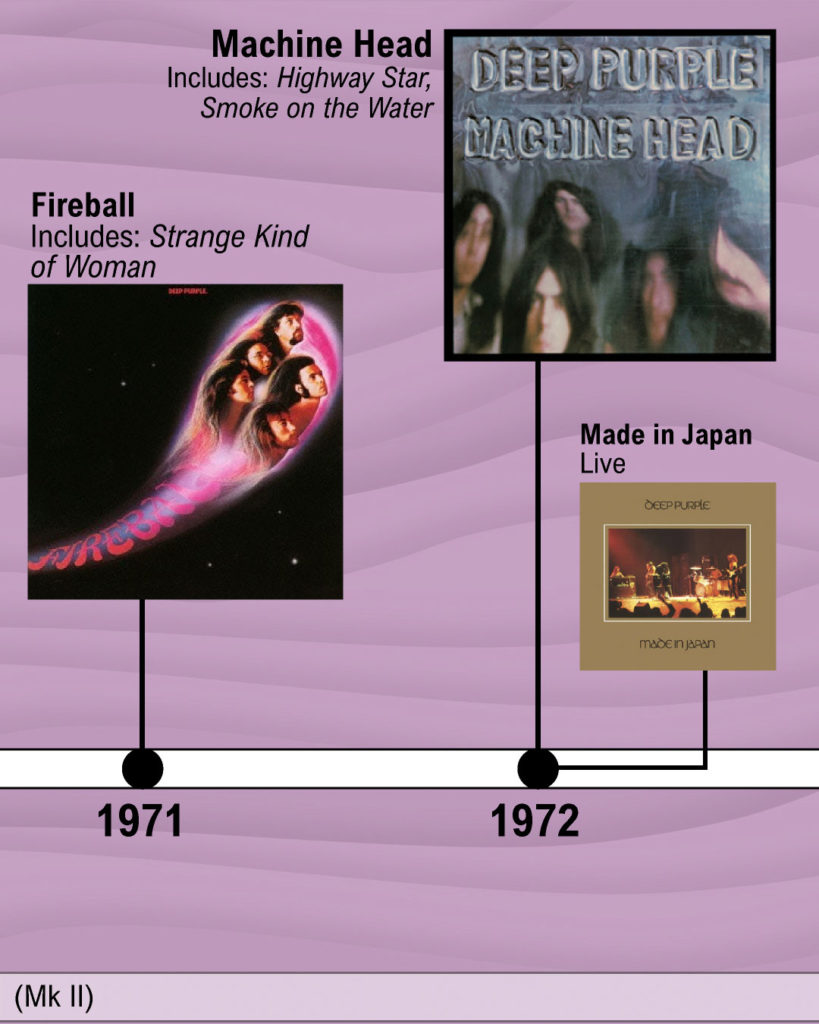
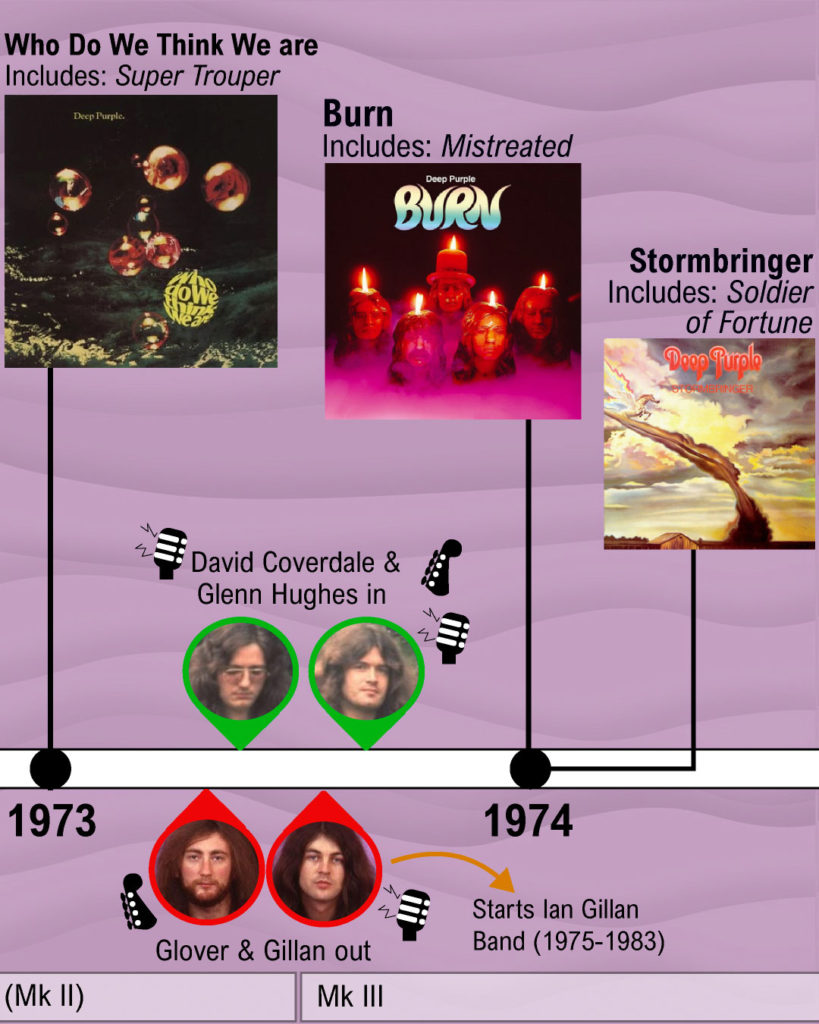
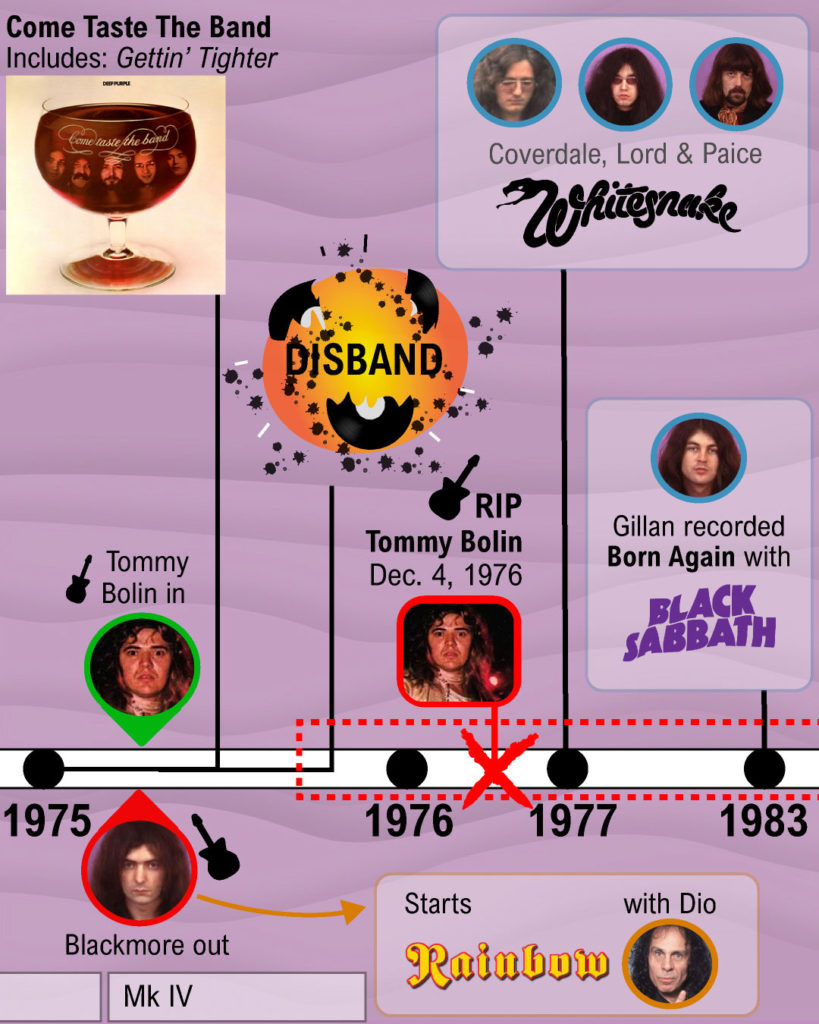
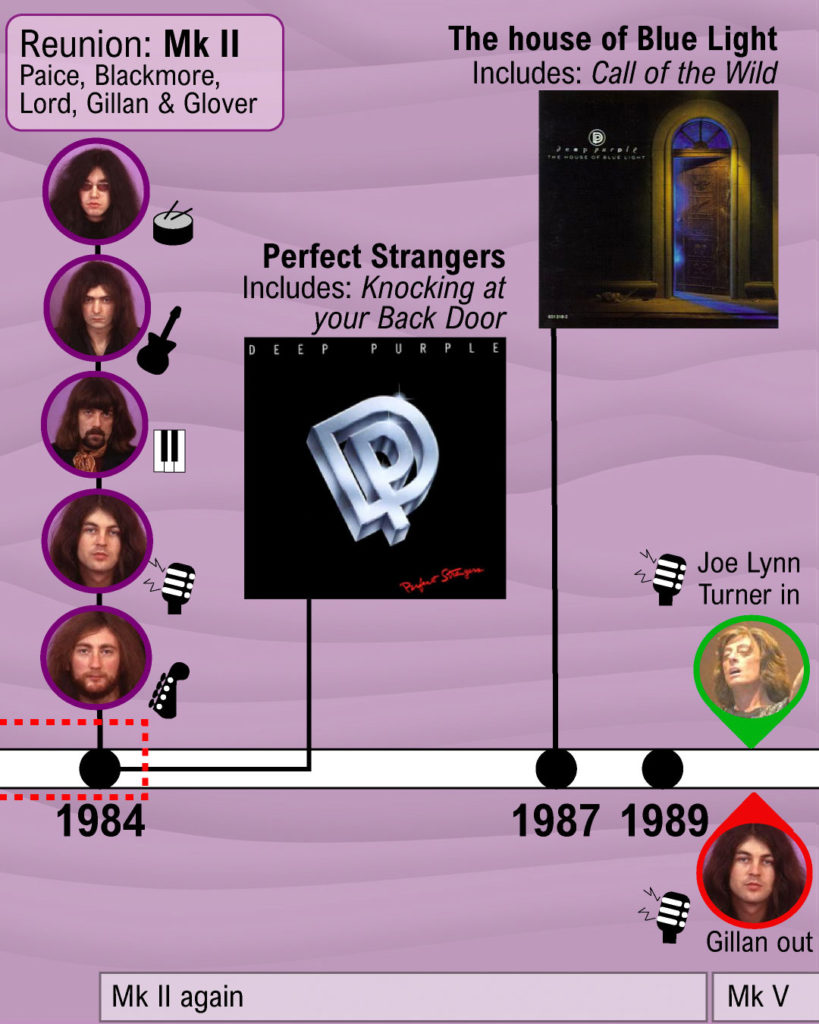
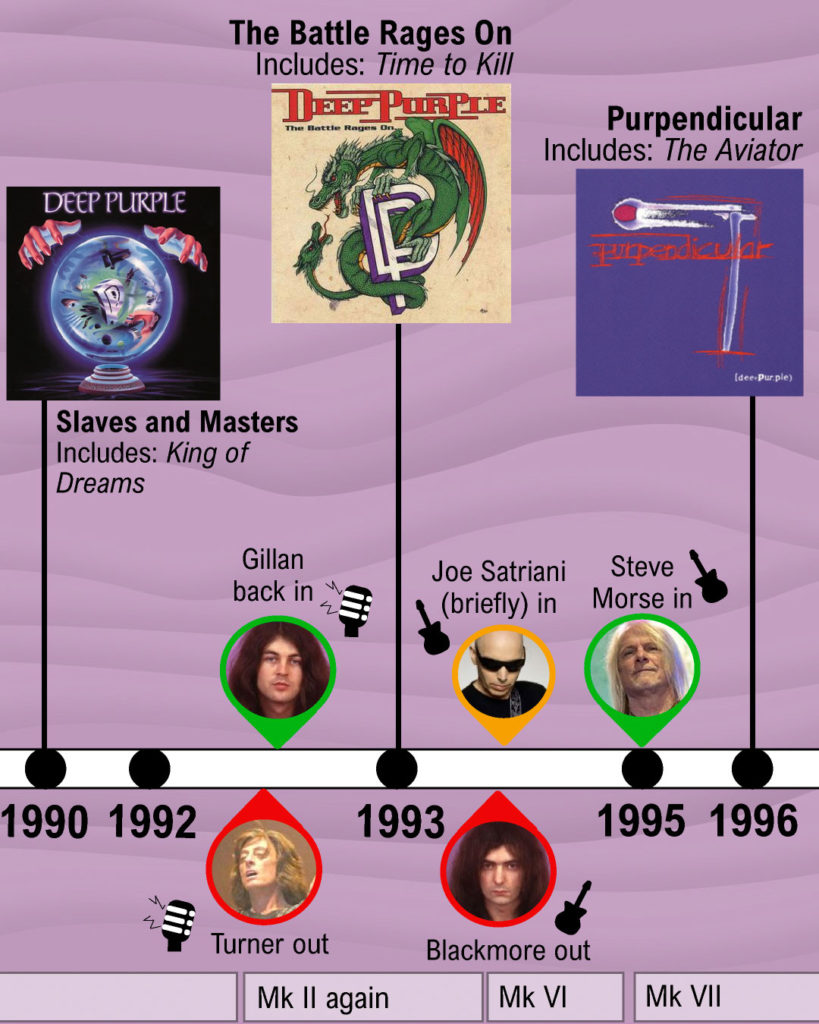
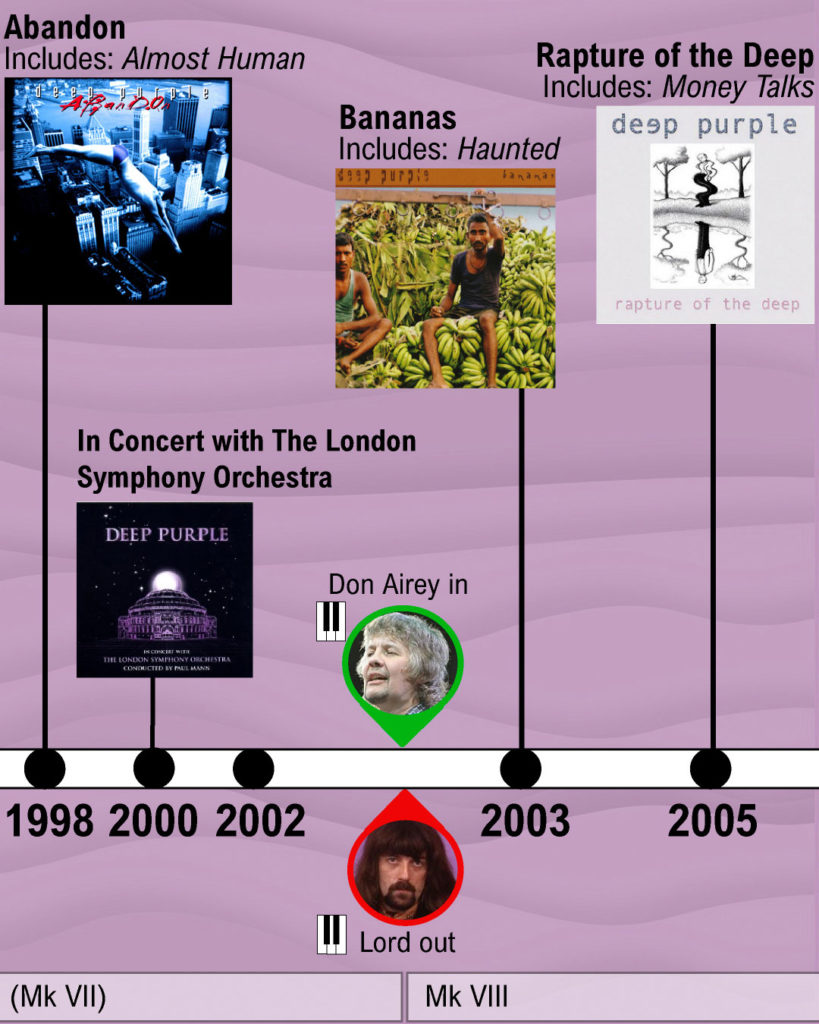
Deep Purple began their career in 1968 with the Mark I lineup and remain active today with Mark IX. The band were officially inactive between 1976 and 1983 before returning with their classic Mark II lineup in 1984, which is their most regarded.
This timeline looks at the different Deep Purple lineups, the musicians who defined each era, the reasons behind the major changes, and the side projects that emerged along the way.
Deep Purple Lineups: A Quick Snapshot
Deep Purple’s lineups are traditionally identified as Mark I through Mark IX. Although the lead singer position has changed several times, virtually every role in the band has been affected by lineup changes at some point.
The one constant throughout Deep Purple’s entire recording career has been drummer Ian Paice, the only musician to have appeared on every studio album released by the band.
The most celebrated eras are generally associated with Mark II, which returned three times. The key member of this lineup are lead singer Ian Gillan and guitar virtuoso Ritchie Blackmore.
That said, the Mark III lineup also enjoyed notable success. It included David Coverdale on vocals, Blackmore, Glenn Hughes on bass and vocals, as well as Blackmore. Neither Ian Gillan nor Roger Glover where part of this lineup.
Also to note, tjhe Mark VIII lineup remains the most stable of Deep Putple’s lineups, as it lasted forfor more than two decades. It featured Steve Morse as a guitar plaver. In 2022, Morse had to step back from the position becaºuse of health problems, and was replaced with Simon McBride, leading to the current Mark IX era.
Deep Purple’s Members, from Mark I to Mark IX
| Era | Lineup | Years |
|---|---|---|
| Mark I | Evans / Blackmore / Lord / Simper / Paice | 1968–1969 |
| Mark II | Gillan / Blackmore / Lord / Glover / Paice | 1969–1973, 1984–1989, 1992–1993 |
| Mark III | Coverdale / Blackmore / Lord / Hughes / Paice | 1973–1975 |
| Mark IV | Coverdale / Bolin / Lord / Hughes / Paice | 1975–1976 |
| Mark V | Turner / Blackmore / Lord / Glover / Paice | 1989–1992 |
| Mark VI | Gillan / Satriani / Lord / Glover / Paice | 1993 |
| Mark VII | Gillan / Morse / Lord / Glover / Paice | 1994–2002 |
| Mark VIII | Gillan / Morse / Airey / Glover / Paice | 2002–2022 |
| Mark IX | Gillan / McBride / Airey / Glover / Paice | 2022–present |
Here is a closer look at every Deep Purple lineup.
Deep Purple Mark I: The psychedelic beginnings
Deep Purple’s first lineup was active from 1968 to 1969.
- Rod Evans (vocals)
- Ritchie Blackmore (guitar)
- Jon Lord (keyboards)
- Rick Simper (bass)
- Ian Paice (drums)
Deep Purple Mark I recorded three albums: Shades of Deep Purple and The Book of Taliesyn, both released in 1968, followed by the self-titled Deep Purple in 1969.
The band’s early sound was strongly connected to psychedelic rock, with Jon Lord’s keyboards and Ritchie Blackmore’s guitar already pointing toward the heavier direction that would soon define Deep Purple.
Why did Deep Purple Mark I end?
The main reason was a growing desire among Blackmore, Lord, and Paice to move away from psychedelic rock and toward a heavier, harder-edged sound.
That shift would become the foundation of Deep Purple’s most famous era.
Deep Purple Mark II: Their most successful lineup
Deep Purple’s most successful and influential lineup was Mark II. It first existed from 1969 to 1973 and later reunited twice, from 1984 to 1989 and again from 1992 to 1993.
The classic Mark II lineup consisted of:
- Ian Gillan (vocals)
- Ritchie Blackmore (guitar)
- Jon Lord (keyboards)
- Roger Glover (bass)
- Ian Paice (drums)
This lineup helped establish the musical blueprint for hard rock and heavy metal, combining Blackmore’s aggressive guitar playing, Lord’s powerful organ sound, Gillan’s high-pitched vocals, Glover’s bass, and Paice’s dynamic drumming.
Deep Purple Mark II albums, 1969–1973
- Deep Purple in Rock (1970)
- Fireball (1971)
- Machine Head (1972)
- Who do we think we are (1973)
Deep Purple’s Mark II era also produced some of the band’s best-known songs, including “Smoke on the Water,” “Highway Star,” “Child in Time,” and “Space Truckin’.”
Deep Purple Mark II returns, 1984–1989
The classic Mark II lineup reunited in 1984 and released two studio albums:
- Perfect Strangers (1984)
- The House of Blue Light (1987)
The reunion proved that the classic lineup could still attract a huge audience more than a decade after its original breakup.
The final Mark II reunion, 1992–1993
Mark II reunited for a third and final time in 1992. The result was The Battle Rages On…, released in 1993.
But the reunion was short-lived. The long-running tension between Ian Gillan and Ritchie Blackmore once again became a major issue.
This time, however, Blackmore was the one who left. His departure in 1993 marked the end of the classic Mark II lineup for good, while Gillan remained with Deep Purple.
Deep Purple Mark III: Coverdale & Hughes Era
Mark III was active from 1973 to 1975 and introduced two important new members:
- David Coverdale (vocals)
- Glenn Hughes (bass, vocals)
- Ritchie Blackmore (guitar)
- Jon Lord (keyboards)
- Ian Paice (drums)
Deep Purple’s Mark III lineup gave Deep Purple a noticeably funkier and more groove-oriented sound than Mark II.
Their first album, Burn (1974), was a major success and introduced a new vocal and musical dynamic. The follow-up, Stormbringer, also released in 1974, leaned even further toward funk and soul, which increasingly frustrated Ritchie Blackmore.
Why did Deep Purple Mark III end?
Blackmore was unhappy with the band’s musical direction and left Deep Purple in 1975. Rather than ending immediately, however, the remaining members decided to continue with a new guitarist.
That led to Deep Purple Mark IV.
Mark IV: The Tommy Bolin era and the breakup of Deep Purple
In 1975, American guitarist Tommy Bolin replaced Ritchie Blackmore, creating the Mark IV lineup:
- David Coverdale (vocals)
- Glenn Hughes (bass and vocals)
- Tommy Bolin (guitar)
- Jon Lord (keyboards)
- Ian Paice — drums
The lineup recorded Come Taste the Band, released in 1975.
Although the album introduced a noticeably different sound, the new lineup struggled with internal tensions and the pressures of constant touring and recording. Tommy Bolin and Glenn Hughes were also dealing with serious substance-abuse problems.
Eventually, Ian Paice and Jon Lord decided they could no longer continue under those conditions. Deep Purple officially disbanded in 1976.
Tragically, Tommy Bolin died later that year at the age of 25.
Deep Purple would remain inactive until 1984.
The return of Deep Purple Mark II in 1984
In 1984, Deep Purple reunited with its classic Mark II lineup:
- Ian Gillan (vocals)
- Ritchie Blackmore (guitar)
- Jon Lord (keyboards)
- Roger Glover (bass)
- Ian Paice (drums)
As we mentioned earliear, the reunion produced Perfect Strangers and The House of Blue Light, as well as a major world tour.
But the old tensions between Gillan and Blackmore eventually resurfaced. Gillan left in 1989, setting the stage for another new incarnation of Deep Purple.
Mark V: Deep Purple’s shortest-lived lineup
With Gillan gone, former Rainbow singer Joe Lynn Turner joined the band.
Mark V consisted of:
- Joe Lynn Turner (vocals)
- Ritchie Blackmore (guitar)
- Jon Lord (keyboards)
- Roger Glover (bass)
- Ian Paice (drums)
This lineup recorded only one studio album, Slaves and Masters, released in 1990. The album received a mixed reception, and there was considerable pressure for Ian Gillan to return.
Turner eventually left the band in 1992, paving the way for another reunion of the Mark II lineup.
The third return of Deep Purple Mark II
In 1992, Ian Gillan returned to Deep Purple, bringing the classic lineup back together for a third time. The band recorded The Battle Rages On…, released in 1993.
This reunion was even shorter-lived than the previous ones. Ritchie Blackmore left the band permanently in 1993 after growing increasingly dissatisfied with Deep Purple’s musical direction and internal situation.
Deep Purple Mark VI and Mark VII
The lineups that followed can be viewed as variations on the Mark II formula, particularly because Ian Gillan, Jon Lord, Roger Glover, and Ian Paice remained at the core of the band.
Mark VI: With Joe Satriani as Touring Guitarist
After Blackmore’s departure, Deep Purple brought in guitar virtuoso Joe Satriani as a temporary replacement.
Mark VI existed primarily as a touring lineup in 1993 and did not record a studio album. Satriani eventually returned to his solo career, leaving Deep Purple in need of a permanent guitarist.
Mark VII: Steve Morse Joins as Guitar Player
In 1994, American guitarist Steve Morse officially joined Deep Purple. The Mark VII lineup was:
- Ian Gillan (vocals)
- Steve Morse (guitar)
- Jon Lord(keyboards)
- Roger Glover (bass)
- Ian Paice (drums)
Deep Purple Mark VII recorded two studio albums:
- Purpendicular (1996)
- Abandon (1998)
Morse would go on to become the longest-serving guitarist in Deep Purple’s history after Ritchie Blackmore.
Mark VIII: The modern era of Deep Purple
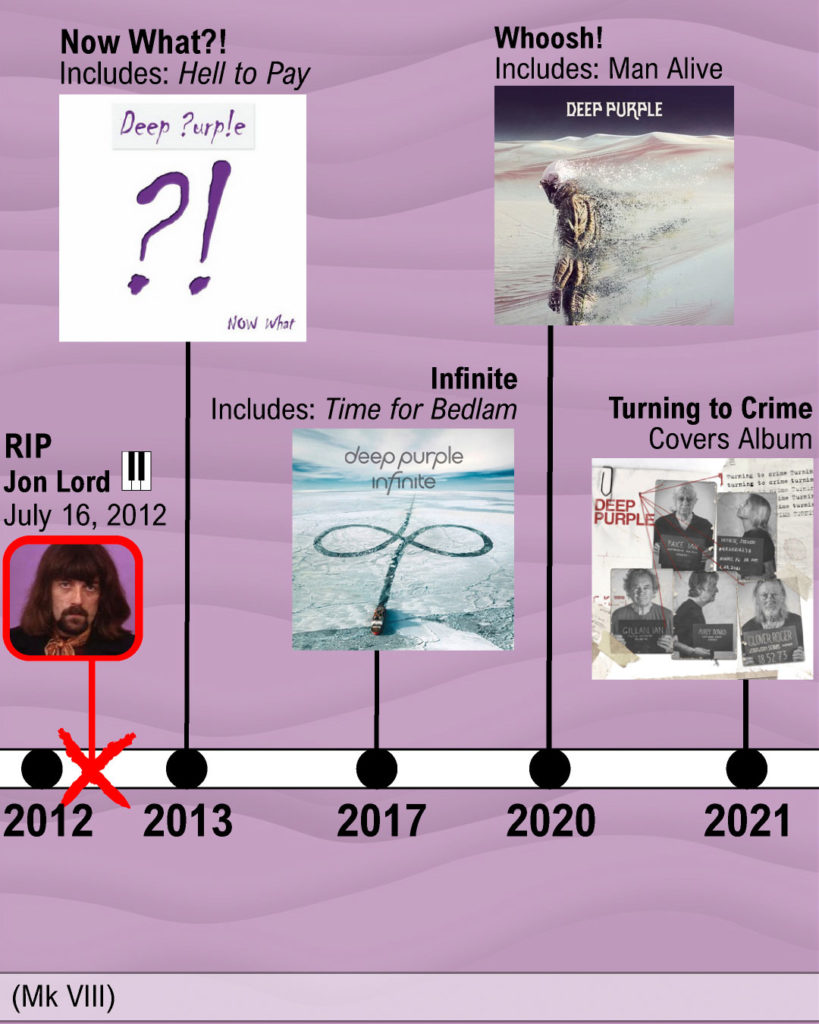
In 2002, founding keyboardist Jon Lord retired from touring with Deep Purple. He was replaced by Don Airey, who had already worked with a remarkable list of rock artists, including Rainbow, Ozzy Osbourne, and Gary Moore.
Lord later died in 2012.
With Don Airey in the lineup, Deep Purple entered what became known as Mark VIII. For many years, the lineup consisted of:
- Ian Gillan (vocals)
- Roger Glover (bas)
- Steve Morse (guitar)
- Ian Paice (drums)
- Don Airey (keyboards)
This lineup recorded:
- Bananas (2003)
- Rapture of the Deep (2005)
- Now What?! (2013)
- Infinite (2017)
- Whoosh! (2020)
- Turning to Crime (2021)
The era marked a remarkably stable period for Deep Purple, with Steve Morse remaining in the band for more than 25 years.
Mark IX: Deep Purple’s current lineup
In 2022, Steve Morse stepped back from Deep Purple because of personal circumstances. Later that year, the band announced that guitarist Simon McBride would join permanently.
McBride had already stepped in for Morse during the 2022 touring period and had previously worked with both Ian Gillan and Don Airey.
As of 2026, Deep Purple’s Mark IX lineup is:
- Ian Gillan (vocals)
- Roger Glover (bas)
- Simon McBride (guitar)
- Ian Paice (drums)
- Don Airey (keyboards)
The current lineup has already released two studio albums:
- =1* (2024)
- SPLAT! (2026)
Released on July 3, 2026, SPLAT! is Deep Purple’s 24th studio album and reunites the band with producer Bob Ezrin. The band has described the record as one of its heaviest releases in many years, while Ian Gillan has specifically pointed to its connection with the dynamics and spirit of the classic 1969–73 period.
Deep Purple remain an active touring band in 2026.
Rainbow
In 1975, after leaving Deep Purple, Ritchie Blackmore founded Rainbow. The band became an important part of his career outside Deep Purple and featured singers including Ronnie James Dio and Joe Lynn Turner.
Black Sabbath
Ian Gillan joined Black Sabbath for the 1983 album Born Again, his only studio album with the band.
Glenn Hughes also became involved with Tony Iommi’s solo project during the 1980s. The resulting album, Seventh Star, was ultimately released under the Black Sabbath name in 1986.
We actually cover this in detail in Black Sabbath’s History Timeline, which of course covers all of the band’s lineup changes.
Whitesnake
David Coverdale founded Whitesnake in 1978 after leaving Deep Purple. Jon Lord and Ian Paice subsequently joined the band, with Paice remaining until 1979 and Lord until 1984.
These are only some of the many projects associated with Deep Purple members. Their extended musical family also includes the Ian Gillan Band, solo albums by several members, Rainbow, Whitesnake, and numerous collaborations across the worlds of hard rock and heavy metal.